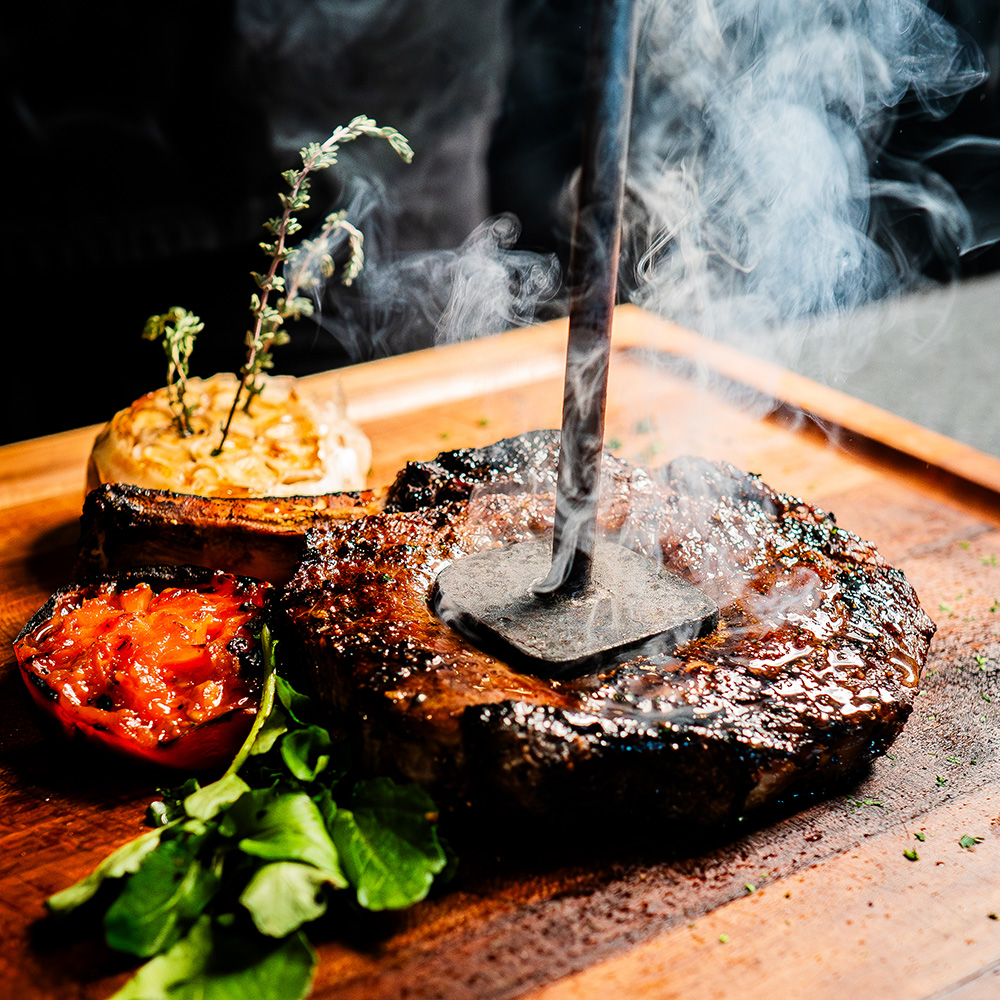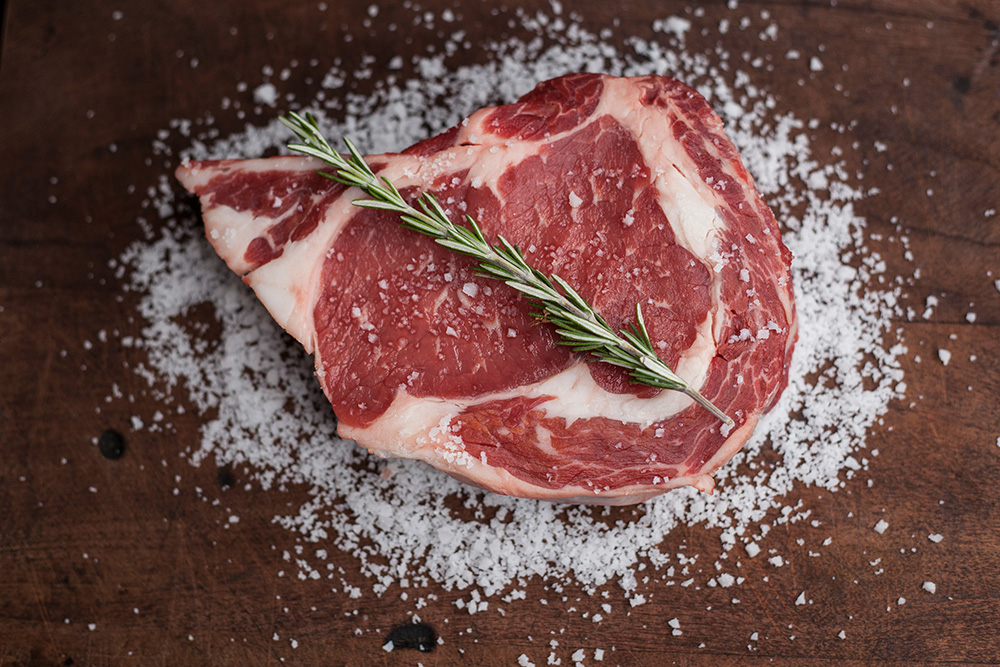
Those thin white lines running through a raw steak aren’t something to trim away. They’re a big part of why one steak carries deep, beefy flavor while another falls flat.
That’s marbling: the fat woven through the muscle itself. At Sullivan’s Steakhouse, a classic American steakhouse that hand-selects USDA Prime beef, we look for it in every cut we serve, because it’s usually the difference between a good bite and one worth savoring.
Here’s what marbling actually is, why it matters once the steak hits the grill, and how to spot it before it ever reaches your plate.
What Does “Marbling” Mean?
The Fat Woven Through the Muscle
Marbling refers to the thin white lines of fat running through the lean red muscle in beef. This intramuscular fat, sometimes called white fat at a glance, creates a web-like pattern you can see in a raw steak before it ever touches the grill.
Marbling isn’t the same as the fat sitting outside a cut or between separate muscles. Here’s the difference:
- Subcutaneous fat, the thick layer on the steak’s exterior
- Intermuscular fat, larger deposits between muscles
Neither one adds flavor the way true marbling does.
Why It’s Called “Marbling”
The name comes from a simple comparison. Those fine streaks of fat resemble the veining you’d see in marble stone.
Fine, evenly distributed flecks of fat point to higher marbling and better grading potential, while large, uneven chunks usually mean a lower grade. It’s a small visual cue that tells you a lot before your fork ever touches the plate.
Why Marbling Matters
More Marbling, More Flavor
Fat carries most of a steak’s flavor, and marbling is where most of that fat resides. As the steak cooks, the fat starts to render and liquefy, basting the meat from the inside and working its way into every fiber.1
That same fat adds moisture along with flavor, which is why a well-marbled steak tastes more intense and beefy than a leaner one, especially next to the best cuts of steak our menu is built around.
Leaner cuts simply can’t match that richness, no matter how carefully they’re cooked.
Marbling Affects Tenderness Too
Marbling does more than season the meat. It creates separation between muscle fibers, and when that fat melts, it lubricates the meat, producing a texture that slices easily.
That same fat works like built-in insurance. Even if a steak cooks a touch past where you meant to stop it, the marbling keeps the steak juicier than a leaner cut would manage.
Leaner cuts, with less fat to fall back on, dry out more easily on the grill, which is one more reason marbling earns its reputation.
What Affects Marbling in Beef
A few factors impact marbling before a steak ever reaches the plate. Breed, feed, and how an animal is raised all shape how much fat weaves through the muscle:
- Breed – Cattle breeds vary widely in how much fat they naturally develop. Certain breeds carry more marbling potential than others: Angus cattle are known for consistently good marbling, and breeds like Wagyu take it further, with genetics built for fine, evenly distributed flecks of fat. Wagyu’s marbling also runs finer than most Angus beef, thanks in part to oleic acid, a fat that gives the meat its silky texture.
- Feed – What an animal eats matters too. Grain feeding tends to build richer marbling than grass feeding, since grain helps cattle develop more finely distributed fat through the muscle, part of why grain-fed beef carries a reputation for high-quality, premium flavor, a culinary detail that shows up the moment the steak hits the plate.
- Distribution – The distribution of marbling across the carcass matters for grading, too. Visually, a carcass with fine, evenly spaced flecks of intramuscular fat is considered more desirable than one with large, uneven deposits.
How Marbling Relates to USDA Grading
USDA Prime vs. Choice vs. Select
Marbling is the single biggest factor USDA inspectors weigh when assigning quality grades. The grading system relies almost entirely on how much marbling shows up in the ribeye muscle, examined at the junction of the 12th and 13th ribs.2
Here’s how the three main grades break down:
- Prime – abundant marbling throughout the meat, the grade that classic steakhouses serve
- Choice – moderate marbling with reliable tenderness and flavor, though consistency varies
- Select – minimal marbling, leaner, and less forgiving on the grill
For marbling that goes beyond even Prime, Japanese Wagyu uses its own BMS scale. See how it compares in our American vs Japanese Wagyu breakdown.
Which Cuts Tend to Have the Most Marbling
When you’re deciding what steak to order, the ribeye stands out as the most heavily marbled cut on the menu. It’s the same muscle USDA graders examine, so its reputation is well earned.
New York strip carries a concentrated band of marbling with a firmer bite. The tenderloin, where filet mignon comes from, is prized for its buttery tenderness but naturally carries far less marbling than a ribeye or strip.
Explore the full breakdown in our types of steak cuts rundown.
Taste Well-Marbled Steak at Sullivan’s
At Sullivan’s Steakhouse, fine, even Prime marbling comes standard in every cut we serve. Our team takes real pleasure in helping guests find the best cuts of steak, whether that means the rich marbling of a ribeye or the buttery tenderloin.
Browse the Sullivan’s Steakhouse menu to see what’s waiting. Find a Sullivan’s Steakhouse location near you and book a reservation to pair Prime marbling with a signature cocktail and live music.
For special occasions, our private dining spaces give milestone dinners room to linger.
Sources
- UAEX UADA. Fat means flavor when it comes to beef. https://www.uaex.uada.edu/media-resources/news/2025/may/05-05-2025-ark-beef-marbling.aspx
- AMS USDA. USDA Beef Grades. https://www.ams.usda.gov/sites/default/files/media/beefgradesinfog2026.pdf