You’ve probably noticed a red, blood-like liquid pooling on your plate and wondered if it’s blood. If that thought makes you a little squeamish, here’s the good news: it isn’t blood.
The truth is much simpler. What you’re seeing is mostly water mixed with myoglobin, a naturally occurring protein that helps give beef its rich color and flavorful character.
Here’s what that red juice actually is, why it appears during cooking, and why it plays an important role in creating a tender and juicy steak.
Is the Red Juice in Steak Actually Blood?
The short answer is no. That red stuff is mostly water carrying myoglobin from the muscle.
The Common Misconception About Steak “Blood”
Many people assume a rare steak looks red because it’s full of blood. Terms like “bloody rare” only add to the confusion. In reality, very little blood remains in a piece of meat after processing.
During the slaughter process, virtually all blood is removed from beef during slaughter1, and only a small amount remains within the muscle tissue. There isn’t blood sloshing around inside your steak, and the liquid you see isn’t blood sloshing around in the package either.
What often collects as purge in the bottom of a package is simply moisture released from the meat.
What It Really Is: Myoglobin
The red liquid comes from water stored in the cells, along with myoglobin, a protein that transports oxygen within muscle tissue.
Myoglobin is a protein that helps store oxygen for movement.2 The more active the muscle, the higher the levels of myoglobin tend to be. That’s why beef appears darker red than chicken or other white meat.
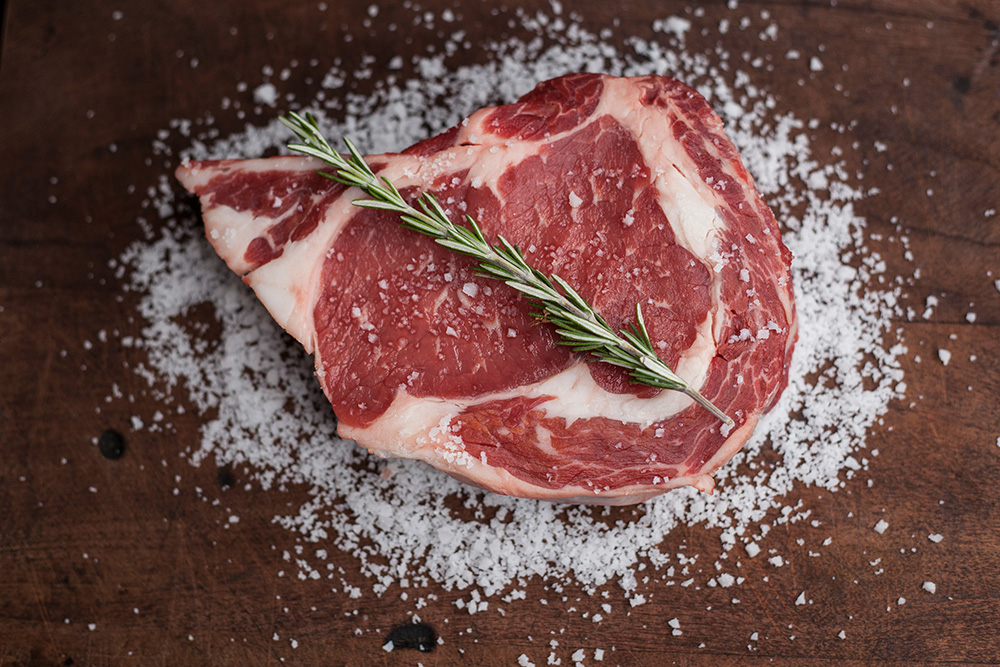
This is why beef qualifies as “red meat” while poultry stays pale, since it contains less myoglobin. When a raw steak is freshly cut and exposed to oxygen, the interaction of myoglobin and oxygen creates the bright red steaks many people associate with freshness. Before exposure to air, beef can have a darker, purplish hue.
Why Does Steak Release Red Juice When Cooked?
Temperature transforms everything about the red juice you see on your plate.
Heat Changes the Meat’s Proteins
As the steak cooks, myoglobin gradually darkens as temperatures rise until myoglobin becomes hemichrome, creating the gray-brown appearance associated with well-done levels of doneness.
At the same time, muscle tissue breaks down and moisture escapes. As meat ages, freezes, and thaws, ice crystals can damage cell walls, reducing muscle cells’ ability to retain moisture.
The resulting substance is the familiar red juice you see on the plate, which can vary depending on steak cooking times and temperature.
Rare vs Well-Done Steak Differences
Different levels of doneness create distinct appearances:
- Rare (120–130°F) – Bright red center with abundant juices
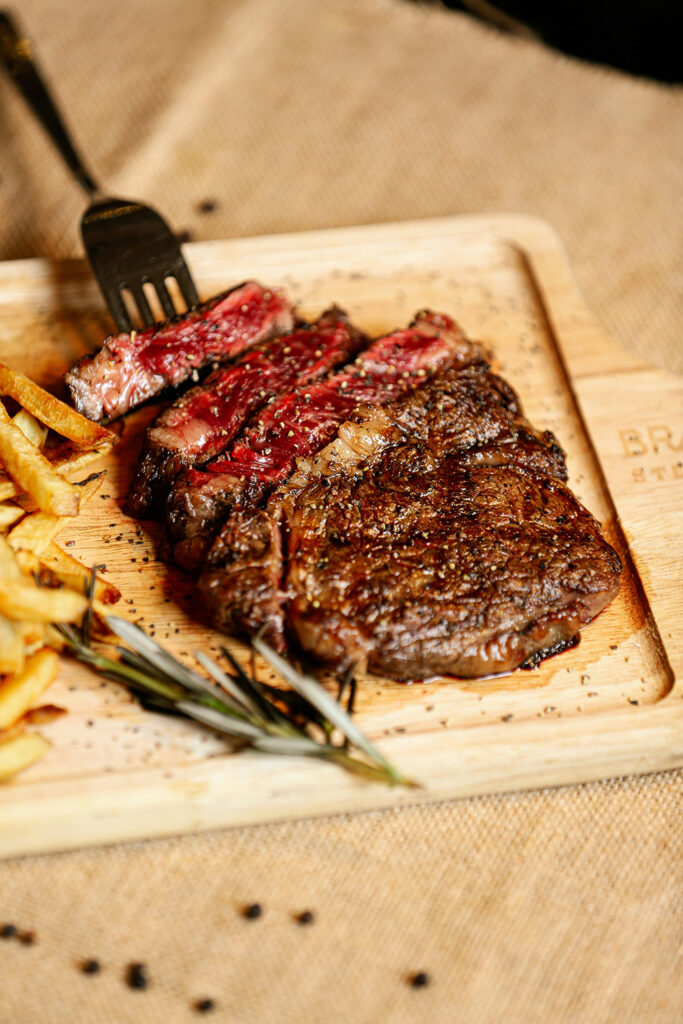
- Medium Rare (130–135°F) – Warm pink throughout, very juicy
- Medium (135–145°F) – Pink center fading to brown edges
- Medium Well (145–155°F) – Slight pink hint, less moisture
- Well Done (155°F+) – No pink, minimal liquid
Color alone never determines doneness. Only the temperature inside the meat tells the full story, which is why professional kitchens rely on a precise steak temperature guide.
Explore the Sullivan’s Steakhouse menu to find a hand-cut USDA Prime steak prepared exactly to your preference.
Does the Red Juice Mean the Steak Is Undercooked?
Not at all. If you are worried about safety, here is the good news.
Temperature Tells the Full Story
While harmful bacteria that can cause foodborne illness are addressed through proper cooking temperatures, color isn’t always a reliable sign of safety.
The USDA recommends a minimum internal temperature of 145°F for whole cuts of beef. A steak reaching that temperature may still show pink in the center because the color of the juices are not accurate indicators of doneness3.
That’s why professional kitchens rely on temperature, not color, to determine doneness.
Steak Temperature Guide
The protein called myoglobin is completely safe to consume. The liquid on a properly cooked plate is harmless and packed with flavor.
Use a thermometer for the final call.
Why Juiciness Matters in a Great Steak
Those flavorful juices represent far more than a byproduct of cooking.
Moisture Helps Create Flavor & Tenderness
The liquid inside a steak contains a combination of water and myoglobin, melted fat, and dissolved proteins. Together, they help create the richness and texture that make great cuts of meat memorable.
When the moisture is gone, even the best cuts of steak taste flat and tough.
How Steakhouses Lock in Flavor
At Sullivan’s, creating better-tasting and juicier steaks comes down to a few simple principles:
- High-heat searing – Creates a flavorful crust that seals in moisture
- Precise temperature control – Preserves juiciness throughout the cooking process
- Proper resting – Allows juices to redistribute throughout the meat
Rather than rushing the process, our chefs give every steak the attention it deserves. The result is a flavorful steak that’s cooked exactly the way you like it.
Common Steak Myths Debunked
A few steak myths are ready for the chopping block.
“Red Means Raw”
A steak can appear red in the center while being perfectly cooked to a safe temperature. Color alone doesn’t determine doneness.
“Juicier Steak Is Unsafe”
The opposite is often true. Juiciness is usually a sign that the steak retained its moisture during cooking. A dry steak is not safer, just overcooked.
“Well-Done Steak Is Always Better Cooked”
Bacteria live on the surface of whole muscle cuts, and searing handles that concern. In fact, research shows that color as an indicator of adequate cooking is not recommended4 because a brown exterior can mask an undercooked interior. In many cases, extended cooking simply draws the moisture out of the meat.
A properly prepared ribeye cooked to medium-rare can be both safe to eat and exceptionally satisfying.
Experience Perfectly Cooked Steak at Sullivan’s Steakhouse
Now that the mystery is solved, you can focus on what really matters: enjoying the steak the way you like it.
At Sullivan’s, every steak is hand-cut, carefully prepared, and cooked with precision. From richly marbled cuts to steakhouse favorites, our chefs understand how to bring out the best flavor and texture in every piece of meat.
Planning a special gathering? From steak catering for memorable events to private dining experiences, Sullivan’s brings the steakhouse experience to every occasion. Find a Sullivan’s Steakhouse location near you and settle in for an evening of exceptional food, signature cocktails, and warm hospitality.
Book a reservation and enjoy a steak with its juices right where they belong.
Sources
- USDA. Beef From Farm to Table. https://www.fsis.usda.gov/food-safety/safe-food-handling-and-preparation/meat-catfish/beef-farm-table
- American Chemical Society. Protein Structure Influences Redox Stability, Oxygen Affinity, and Heat-Induced Denaturation Properties of Bovine Myoglobin, Hemoglobin, and Cytochrome c. https://pubs.acs.org/doi/10.1021/acsfoodscitech.5c00391
- USDA. Doneness Versus Safety. https://www.fsis.usda.gov/food-safety/safe-food-handling-and-preparation/food-safety-basics/doneness-versus-safety
- Beef Research. Fact Sheet Product Quality. https://www.beefresearch.org/media/beefresearch/docs/colorchangesincookedbeef_10-26-2020-118.pdf